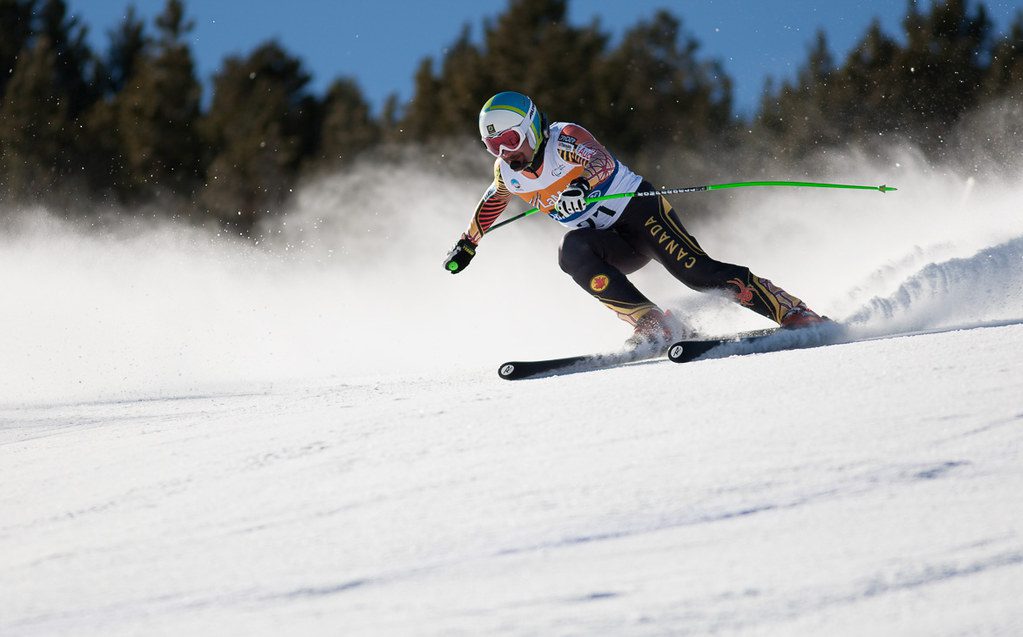

Chris Williamson is a name that has brought Canada international recognition in alpine skiing. Over his career, he competed in four Paralympic Winter Games, winning four medals, including gold in 2002 in Salt Lake City. He also dominated the International Paralympic Committee World Cup circuit, securing 56 gold medals, 14 titles, and 8 Crystal Globes. This article explores the journey and achievements of this remarkable athlete. More at iedmonton.net.
Early Life and Childhood
Chris Williamson was born in Edmonton in 1972 to parents Pamela and Peter. He was born with vision impairment in his right eye due to molecular degeneration caused by toxoplasmosis. By the age of six, he had only peripheral vision in his left eye and was registered with the Canadian National Institute for the Blind. Eventually, his condition stabilized.
Despite his visual impairment, Williamson actively pursued sports. His parents supported him wholeheartedly, teaching him that disability was not a limitation but a challenge to overcome. By the age of three, Chris had already started skiing, and later, he took up judo, hockey, soccer, and baseball.
His parents eventually separated and formed new families, leaving Chris to take on the responsibility of helping raise his four younger siblings. His father, Peter Williamson, was a speed skater and cyclist who represented Canada in cycling at the 1967 Pan American Games in Winnipeg. After retiring from sports, he became the technical director of the Canadian Amateur Speed Skating Association and coached cyclists in Manitoba, including Olympic champion Clara Hughes.
As a teenager, Chris aspired to follow in his father’s footsteps and become a high-level speed skater. At 14, he competed in the 1987 Canada Winter Games in Cape Breton, Nova Scotia. However, shortly after the games, he suffered a broken leg, which forced him to leave the sport.
In 1997, Williamson graduated from the University of Manitoba with a degree in economics. That same year, he returned to skiing and quickly began winning competitions. He soon received an invitation to join the Ontario Skiing for the Disabled team, which competed in events across the country. His success on the slopes caught the attention of the national team, and by 1999, he became a member of Canada’s Para Alpine Ski Team. In his debut World Cup season (1998–1999), Williamson secured five medals for Canada, including three golds.
Paralympic Glory
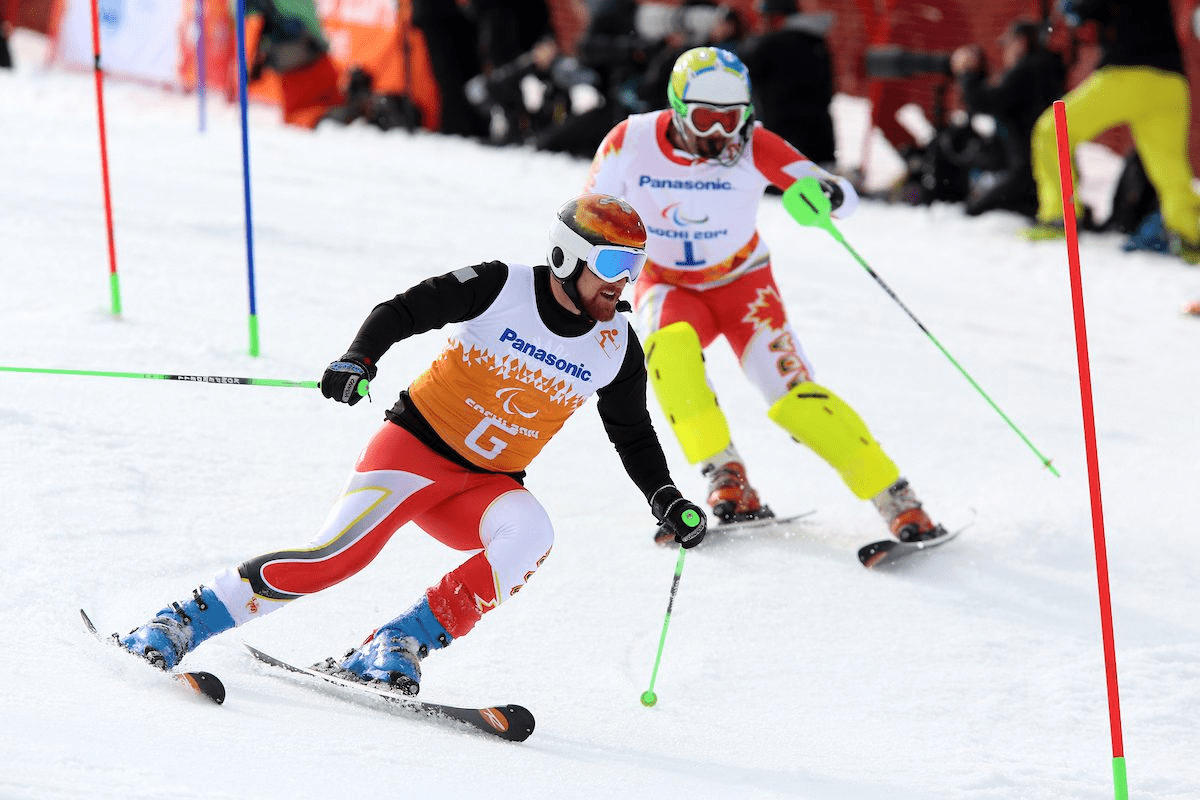
On March 6, 2002, just one day before the opening of the Salt Lake City Paralympic Winter Games, Williamson agreed to film a skiing segment for a TV crew showcasing him in action. He was considered a strong gold medal contender, having recently won the giant slalom World Cup event in Kimberley, BC. However, during filming, he suffered a fall and tore a ligament in his left knee. Doctors told him he would not be able to compete, but he insisted on wearing a knee brace and racing.
Despite missing the downhill event and competing only in super-G and slalom, Williamson delivered an incredible performance on March 16, 2002, winning gold in slalom with a time of 1:53.65, finishing 1.66 seconds ahead of American silver medalist Andy Parr.
In 2006, while training for the Turin Paralympics, Williamson broke his ankle. However, this injury did not stop him from securing silver in the downhill event and bronze in super-G. At the medal ceremony, he arrived in a wheelchair, demonstrating his determination and resilience.
During the 2010 Vancouver Paralympics, Williamson competed in three events but did not win a medal.
Beyond the Paralympics, Williamson dominated World Cup competitions. Between 2003 and 2013, he amassed 57 gold medals and 105 total podium finishes in alpine skiing. Over his 17-year career, he won 14 individual World Cup titles and 8 Crystal Globes, awarded to the season’s overall champion.
World Champion
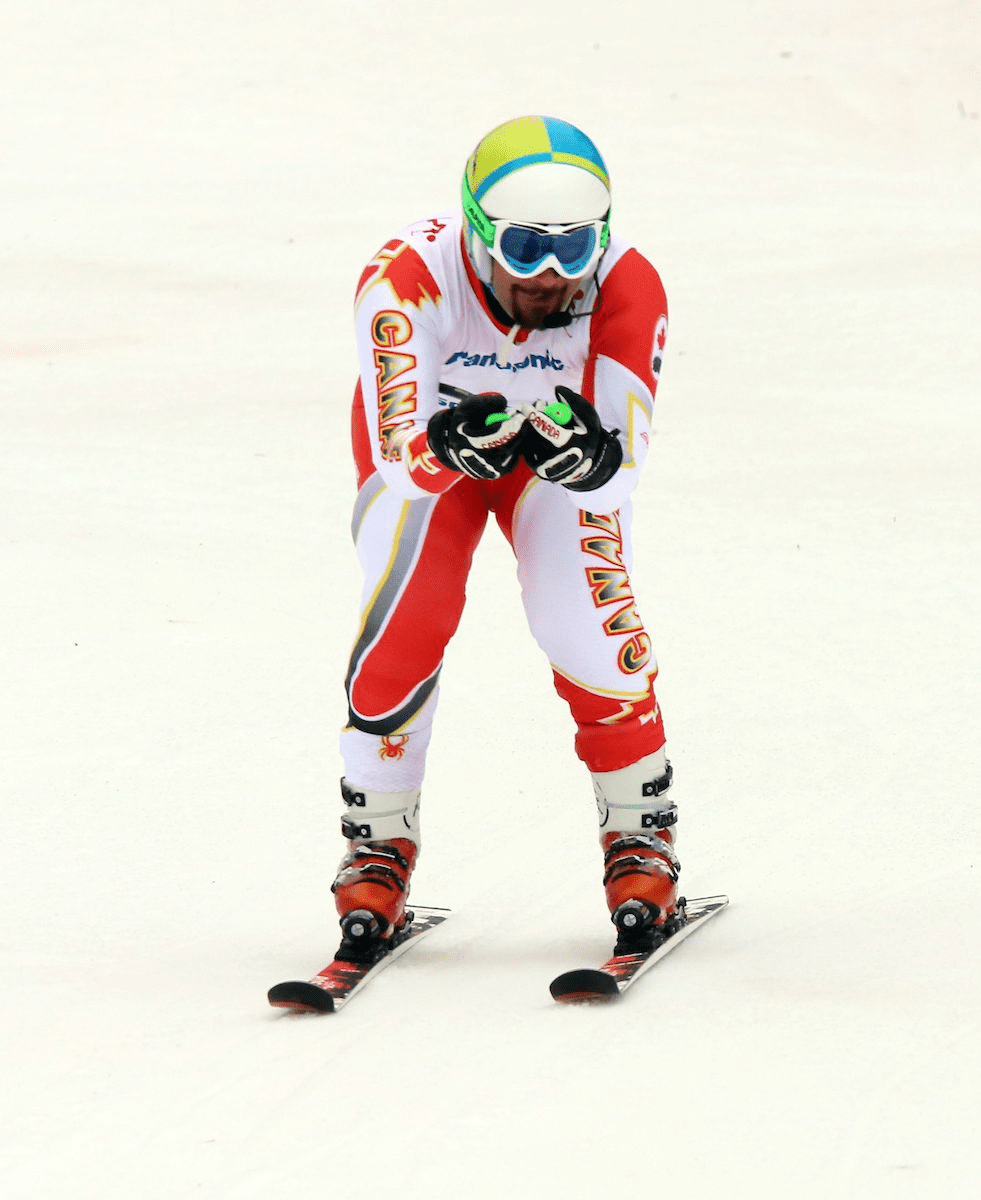
Williamson also excelled on the World Championship stage, securing 14 medals, including two golds—one in men’s super-G in 2009 and another in men’s super combined in 2013.
On January 11, 2011, he became the first skier in IPC history to win 100 World Cup medals. Throughout his career, he also claimed three silver and nine bronze World Championship medals.
In April 2015, Chris Williamson retired from competitive skiing as Canada’s most decorated para-alpine skier. In 2014, he was inducted into the Canadian Disability Hall of Fame.
After retiring from skiing, Williamson pursued a career in finance, working as a financial planning lawyer at RBC in Toronto.
Chris Williamson is married and has two children, Hailey and Alexander.
Chris Williamson’s passion for sports and relentless pursuit of excellence led him to remarkable achievements. He proudly holds the title of one of Canada’s greatest athletes, inspiring generations of para-athletes worldwide.