
The Indigenous peoples of Edmonton are more than just a vital part of the city’s cultural and historical identity. They increasingly influence modern urbanism, education, environmental initiatives, and city policy. Edmonton is gradually rethinking its past by integrating the traditions and deep knowledge of Indigenous peoples into the modern urban landscape. In this article on iedmonton.net, we explore the protection of Indigenous rights in Canada, as well as the preservation of their unique linguistic and cultural heritage. You will learn about environmental initiatives, community collaboration, and official government programs that make historical memory a key driver in the development of modern Edmonton.
The History of Indigenous Peoples in Canada: Treaties, Reserves, and the Fight for Rights
To understand the modern cultural landscape and how Indigenous peoples relate to their heritage, we must look into the past—specifically, the history of their contact with European settlers. Diplomacy played a massive role in these relationships. It was rooted in ancient traditions and demanded a profound respect for the agreements made.
A frequent symbol of these diplomatic ceremonies was the smoking of the peace pipe, or calumet. Such rituals accompanied the signing of agreements and underscored the seriousness of the commitments made by all sides.
Important agreements and historical events were also recorded using wampum belts—special belts made of strung shells or beads. They were not merely decorative but served as a unique memory archive. Through them, information about alliances, major milestones, and mutual promises was passed down from generation to generation.
Over time, the traditional way of life of Indigenous peoples faced severe trials. The economic foundations of their communities were destroyed. The loss of ancestral lands and forced relocation to reserves led to devastating social consequences and a sharp increase in mortality rates.
A new chapter in the fight for their rights began in the 1960s. Indigenous communities began to make their voices heard more loudly. They demanded not only the observance of basic rights but also the revival of their cultural distinctiveness, language, traditions, and national identity.
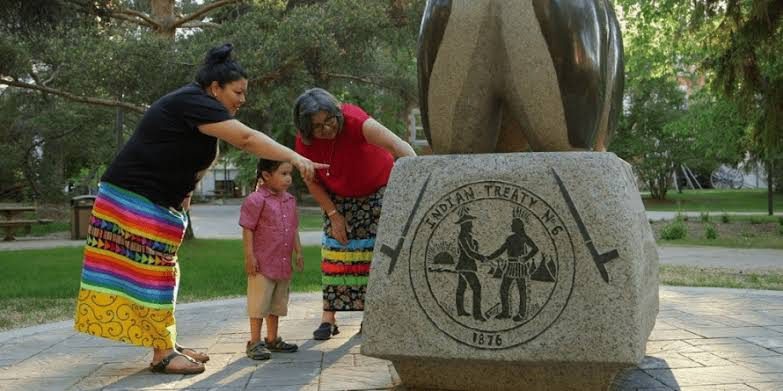
Today, this struggle looks different. Many key issues are now resolved by Indigenous peoples in the courts, where rights to traditional lands, jurisdictional matters, and compensation for historical losses are addressed. At the same time, on a municipal level, a significant step toward restoring justice and honoring historical agreements was Edmonton’s official establishment of Treaty No. 6 Recognition Day.
Cultural Heritage and Indigenous Languages of Alberta: Cree, Blackfoot, and Others
The traditional way of life for Indigenous peoples rests on several key pillars:
- Connection to ancestral lands.
Nature, land, and resources hold profound spiritual and cultural significance for them. They are viewed as a sacred heritage that must be preserved for future generations.
- Traditional livelihoods.
Hunting, fishing, foraging, and other traditional practices have remained the foundation of survival for many communities for centuries.
- Preservation of their own institutions and customs.
Despite all historical challenges, Indigenous peoples continue to safeguard their forms of self-governance, ceremonies, and unique systems of passing knowledge from elders to the youth.
Indigenous languages hold a special place in preserving identity. It is through them that traditional place names, oral histories, and legends are passed down. Language is the key to understanding nature and the worldview of their ancestors.
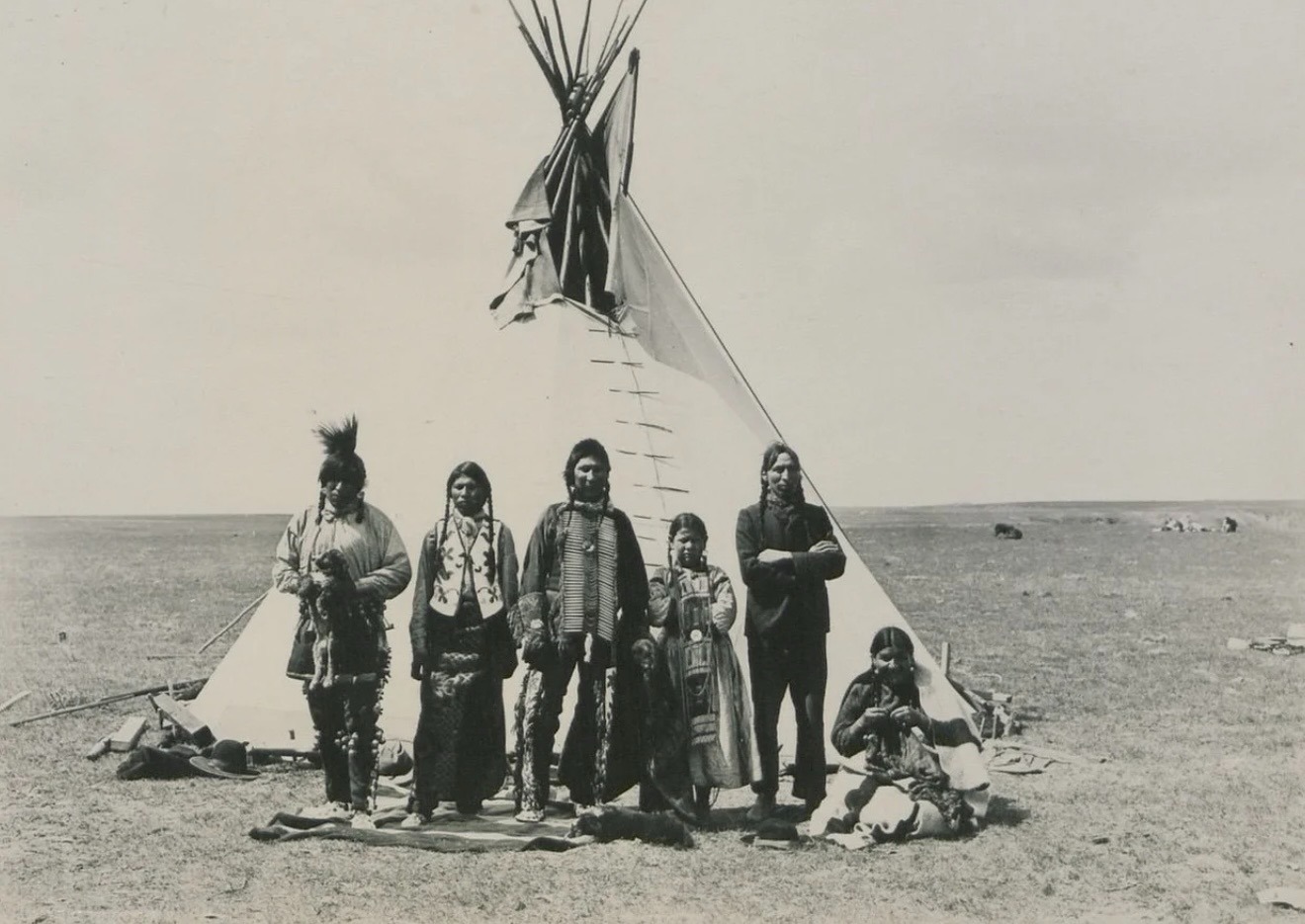
Edmonton and the entire province of Alberta are historically deeply connected to several ethnolinguistic groups. As a result, this linguistic heritage has become an integral part of the city’s cultural landscape.
| Language | Significance for the cultural code |
| Cree | A vital part of the region’s linguistic and historical heritage, deeply connected to the culture and oral traditions of Cree communities. |
| Blackfoot | Helps preserve the historical memory of Indigenous peoples and their interactions across modern-day Alberta. |
| Stoney | Part of the cultural heritage of local Indigenous communities and their traditional systems of self-organization. |
| Tsuut’ina | Reflects the cultural and linguistic diversity of Indigenous peoples in Western Canada. |
| Chipewyan | Serves as a crucial layer of linguistic and cultural heritage, inextricably linked to the region’s history. |
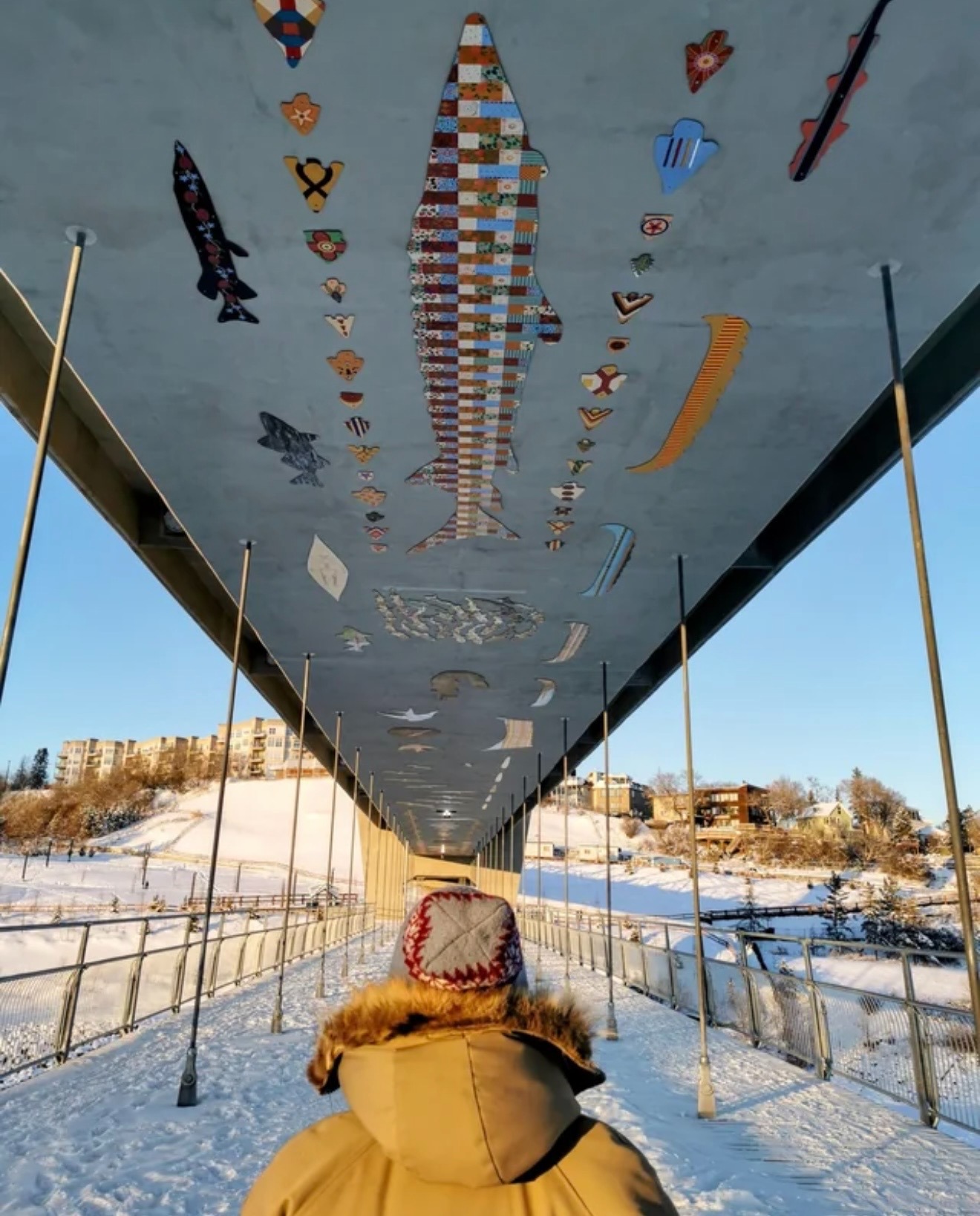
A prime example of how language and art are integrated into urban infrastructure is the new pedestrian walkway under the Tawatinâ Bridge (“valley” in Cree). Its ceiling is adorned with nearly 400 art panels created by Métis artist David Garneau alongside his students. These artworks pay tribute to the history of amiskwacîwâskahikan—the traditional name for the Edmonton area, which translates to “Beaver Hills House.”
Decolonizing Edmonton: New Ward Names and Community Participation in City Governance
Today, Edmonton is taking a confident step forward. The city is shifting from merely symbolically honoring the heritage of Indigenous peoples to actively incorporating it into urbanism. This is about more than just festivals or museum exhibitions. The very approach to shaping urban space, toponymy, and cultural policy is changing.
In October 2021, Edmonton officially renamed several city wards, giving them names in Indigenous languages. This process was guided by a special committee of 17 women from various Indigenous communities, who made their decisions through traditional ceremonies. Thanks to them, names like O-day’min appeared on the map. In the Anishinaabe language, this means “strawberry” or “heart berry”—a vibrant symbol of the very heart of Edmonton.
Strategic documents that set the direction for the city’s development also play a massive role. For example, Edmonton’s Arts and Heritage Plan and reports from the Edmonton Arts Council clearly outline priorities: how to develop the cultural environment, preserve heritage, and engage diverse communities in the metropolis’s cultural life.
Edmonton’s experience shows how the very perception of heritage is shifting. It is no longer just an “artifact from the past” gathering dust on a shelf. Now, it is a living tool that shapes modern urban planning and the creation of shared public spaces.
For Canada, with its diverse ethnic and cultural makeup, this approach is invaluable. Respect for the rights, history, and cultural heritage of Indigenous peoples helps build a modern, inclusive, and welcoming city for everyone.
Environmental Initiatives and National Parks: How Traditional Knowledge Protects Canada’s Nature
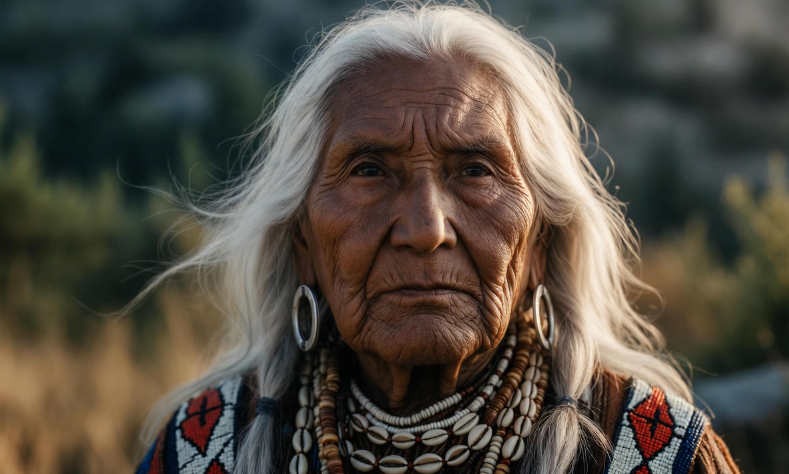
For the Indigenous peoples of Canada, nature has never been merely a resource base. It is an inseparable part of their culture, worldview, and way of life. That is why today, their centuries-old knowledge about the land, water, plants, and animals increasingly forms the foundation of modern environmental management.
In Canadian national parks, representatives of Indigenous peoples (especially the youth) are actively involved in conservation projects. Their traditional ecological knowledge perfectly complements rigorous scientific research. This synergy is heavily utilized in environmental protection planning.
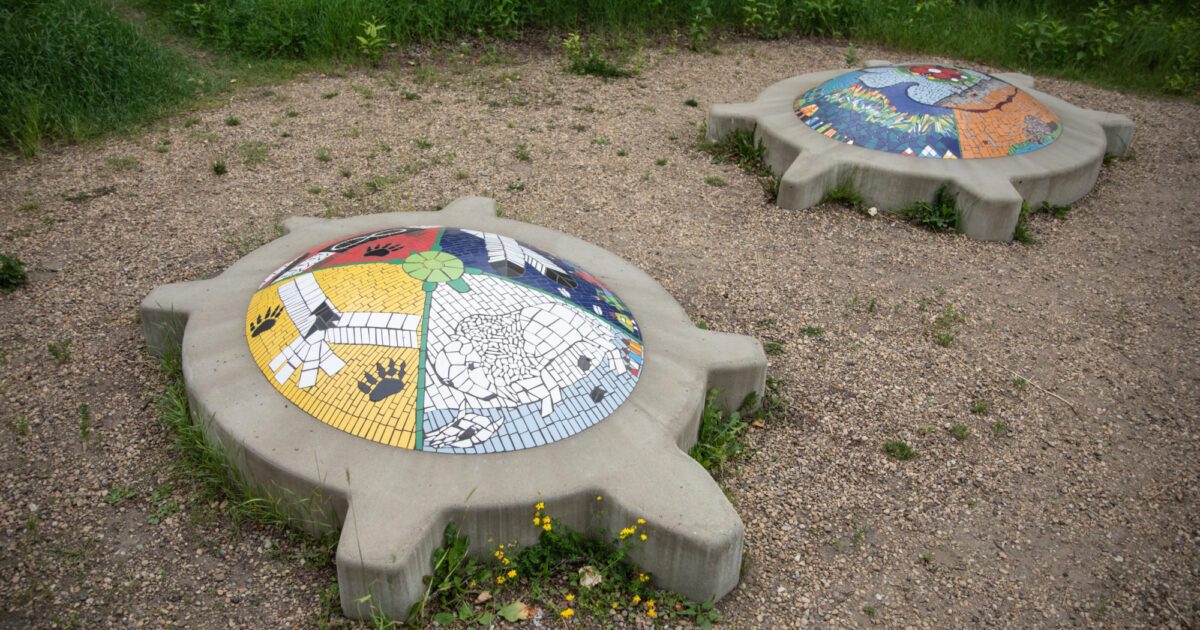
Equally important is the protection of cultural heritage itself. Many parks encompass sacred sites, archaeological monuments, and locations intrinsically linked to the traditions of Indigenous peoples. Preserving them is part of a comprehensive approach to nature conservation. A striking example is the Indigenous Art Park, which features the installation mamohkamatowin (“Helping Each Other”) by Cree artist Jerry Whitehead. The artwork consists of large concrete turtles covered in vibrant mosaics, symbolizing the creation story of Turtle Island according to ancient Cree beliefs.
Today, partnership agreements between the government and Indigenous communities hold special significance. Edmonton actively collaborates with the Confederacy of Treaty Six First Nations, the Enoch Cree Nation, and the Otipemisiwak Métis Government. Such partnerships ensure that Indigenous worldviews are taken into account in heritage management, fostering genuine rather than merely formal reconciliation.
Today, Edmonton’s cultural code is defined by more than just glass skyscrapers, modern art, or multiculturalism. One of its most vital pillars is a profound rethinking of the history and heritage of Indigenous peoples.
Language, traditions, ancestral memory, and deep ecological knowledge are seamlessly weaving into the fabric of urban planning. From supporting Indigenous languages to respecting their voices in matters of toponymy and nature conservation, Edmonton vividly demonstrates how historical heritage can become a powerful engine for the development of a modern metropolis.