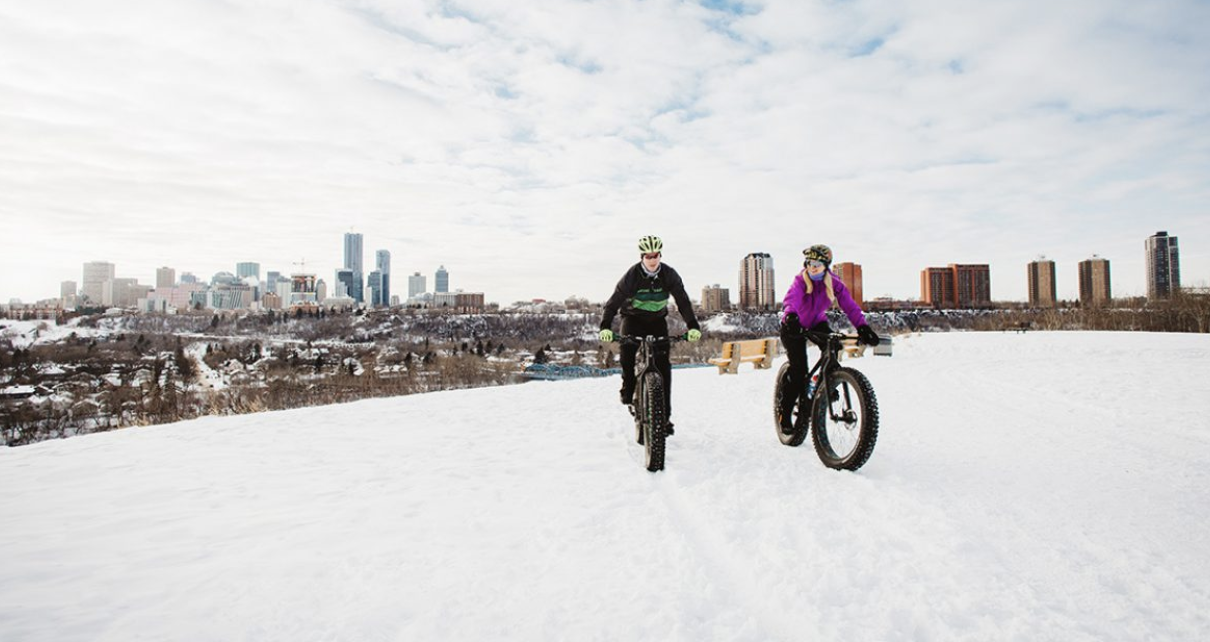

If you think cycling season wraps up on the last warm evening of September, you’ve clearly never lived in Edmonton. Come winter, Alberta’s capital transforms into a frozen Narnia, where sub-zero temperatures and snowdrifts send most sensible people retreating to the fireplace wrapped in three layers of blankets.
Not the local fat bikers, though. To them, a snow-covered Edmonton isn’t a reason to lock the bike away in the garage—it’s an open invitation to North America’s biggest free winter playground. That’s all thanks to the North Saskatchewan River Valley, the largest stretch of urban parkland on the continent—twice the size of New York’s Central Park—which has turned the city into a true mecca for winter cycling. Below, we break down everything you need to know about winter riding in Edmonton on iedmonton.net.
Anatomy of an Iron Steed: Why a Regular Bike Won’t Cut It
Taking a standard road bike or a classic mountain bike onto an Edmonton trail blanketed in fresh snow is a spectacle straight out of an extreme circus. The ride will end much like trying to figure skate across a sandy beach: dramatic, brief, and painfully humbling for both your ego and your tailbone.
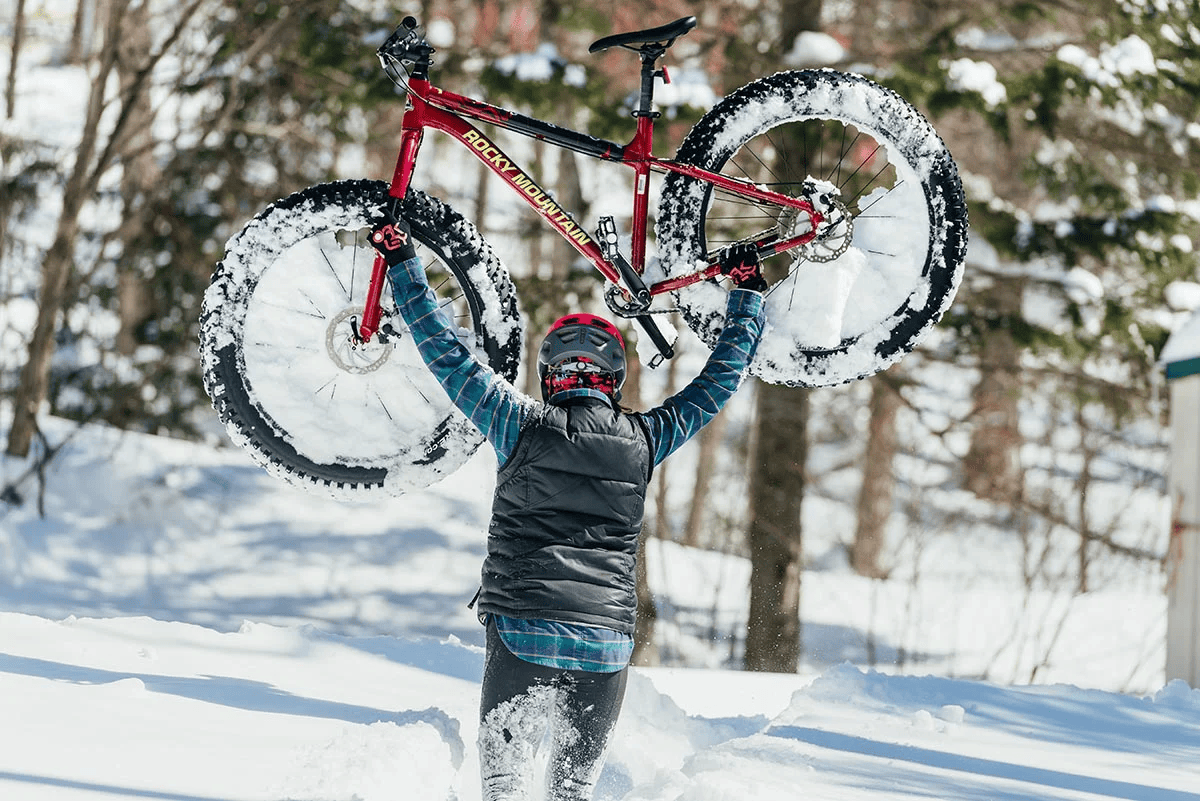
Under a rider’s weight, a standard wheel slices right through the winter crust like a knife through butter, instantly bogging down in the drift. That’s when Northern Alberta’s winter hero rolls onto the snowy stage: the fat bike—a two-wheeled all-terrain rig sporting massive 3.8- to 5-inch tires that has turned winter cycling from pure torture into effortless fun.
The engineering magic behind this winter tank comes down to a couple of key features.
- The Magic of Low Pressure
The secret to a fat bike’s phenomenal traction has nothing to do with oversized pedals or aggressive tread—it’s all about air pressure inside the tire. While a summer mountain bike is pumped up to 2–3 atmospheres, a fat biker deliberately airs down to a remarkably low 0.5–0.8 atmospheres, and sometimes even lower. The tire transforms into a soft, supple cushion. Instead of cutting through the snowpack, it flattens out, dramatically expanding its contact patch so the bike practically “floats” over loose snow. - A Surprisingly Nimble Cruiser
Believe it or not, a quality modern fat bike weighs far less than its rugged, monster-truck proportions suggest. Most tip the scales at a very manageable 13–15 kg. Manufacturers pull this off by using lightweight aluminum alloys or carbon frames paired with rigid forks—which, unlike traditional suspension forks, won’t freeze up and turn sluggish in sub-zero weather.
Head-to-Head on the Winter Trail: MTB vs. Fat Bike
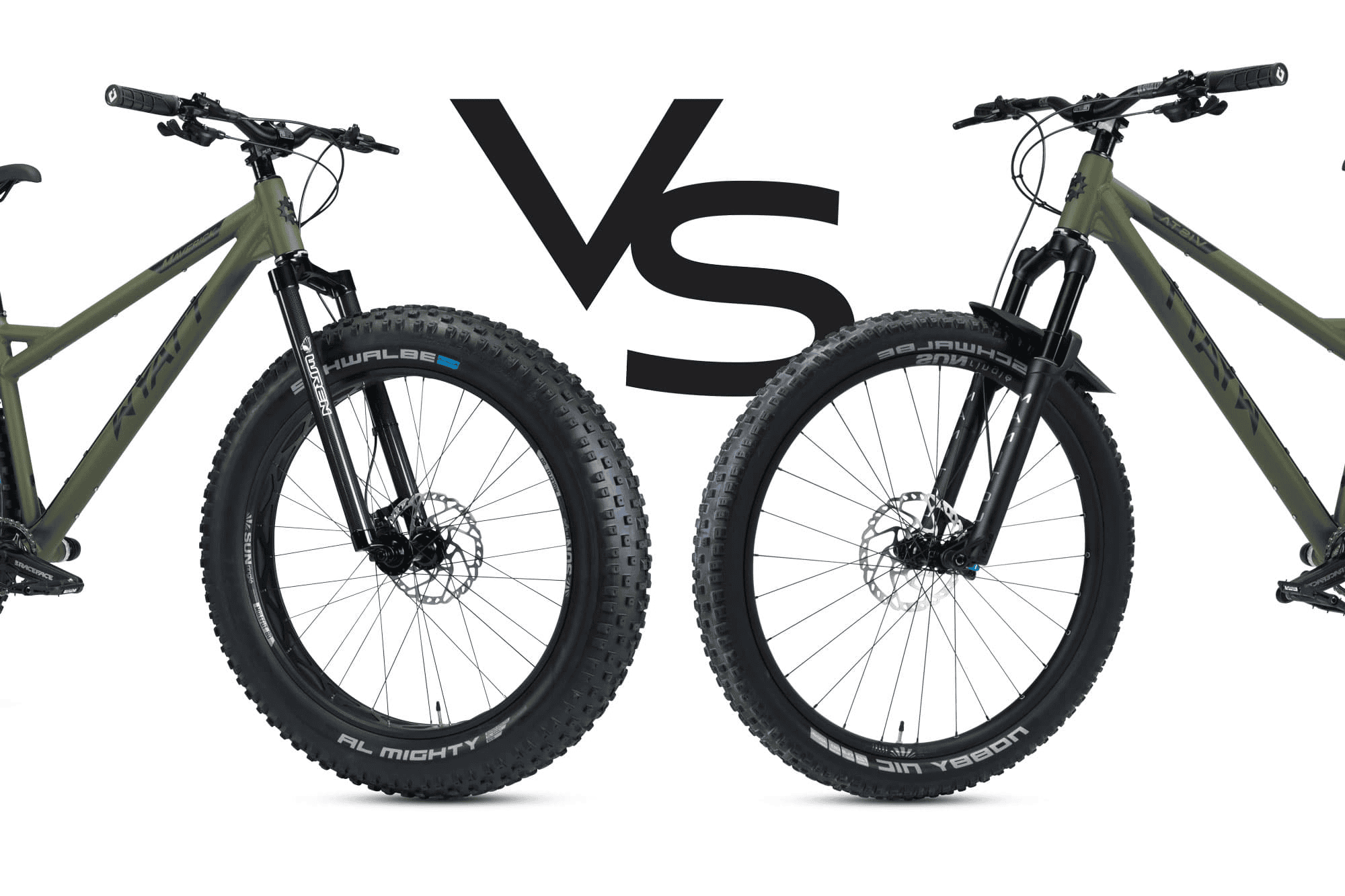
To see just how much a standard ride differs from this purpose-built marvel of bike engineering, take a look at the comparison table below.
| Comparison Feature | Standard Mountain Bike | Winter Fat Bike |
| Tire Width | 2.1 – 2.4 inches | 3.8 – 5.0 inches |
| Tire Pressure | High (2.0–3.0 atm for hardpack) | Ultra-low (0.5–0.8 atm for soft surfaces) |
| Performance in Snowdrifts | Sinks immediately, loses steering, and spins out | “Floats” on top of the snow thanks to a massive contact patch |
| Best Used For | Spring, summer, dry fall | Winter, deep mud, sand, and year-round extreme riding |
Clearly, the structural difference between these two two-wheeled concepts goes well beyond looks. Where a regular mountain bike forces you to shoulder your frame over the next snowbank, a fat bike holds its line with confidence, turning fluffy Canadian powder into a smooth, rideable surface.
Better yet, the beauty of the fat bike lies in its year-round versatility. Come spring, when Edmonton’s melting snow turns trails into an impassable soup of clay and mud, this two-wheeled off-roader just keeps rolling—leaving stunned pedestrians far behind.
River Valley: Thousands of Hectares of Frosted Thrills Right Downtown
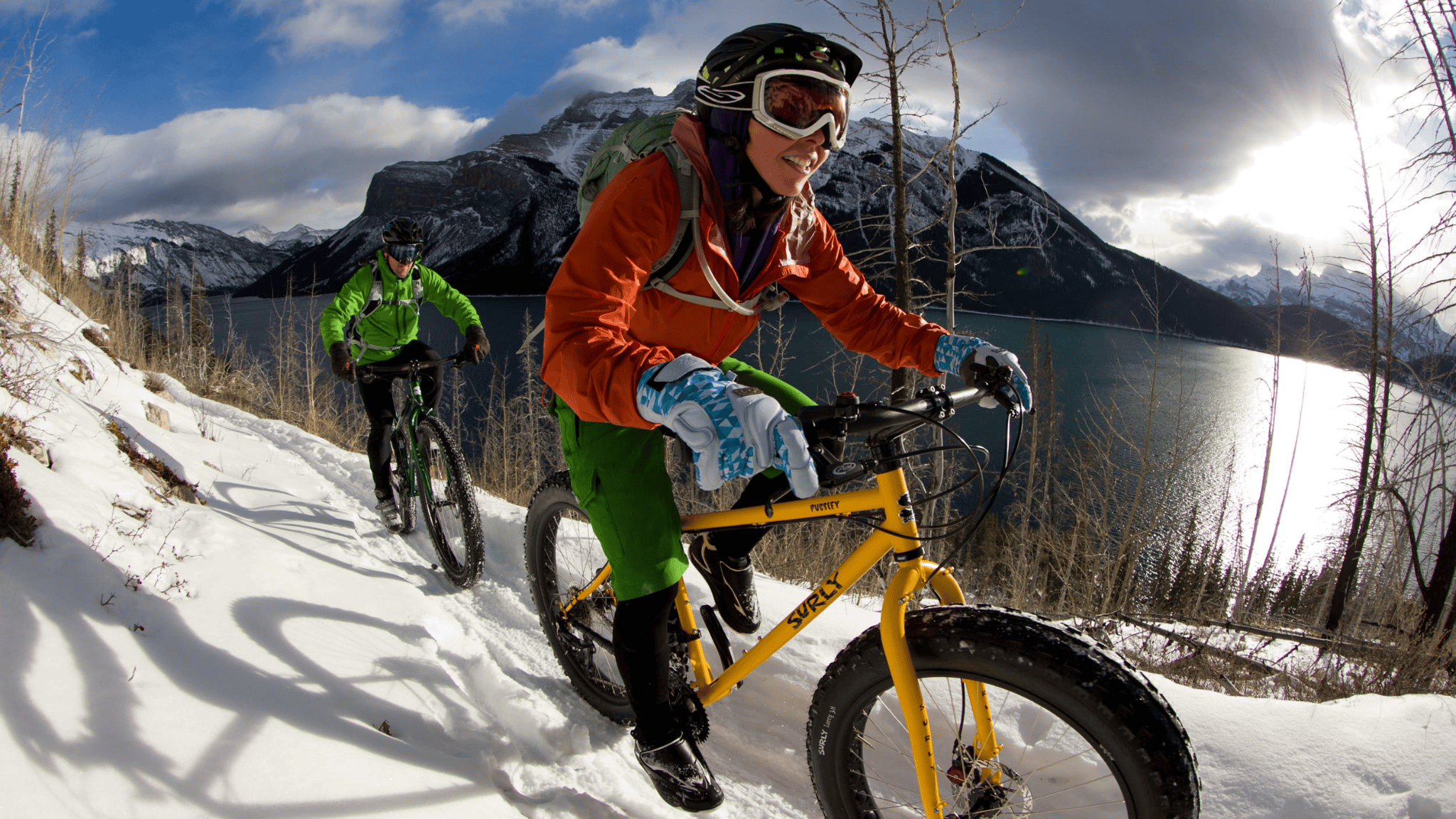
Edmonton’s greatest perk is that untamed wilderness begins right outside the office door. Drop down a steep bank into the North Saskatchewan River valley, and you’re instantly plugged into a network of more than 160 kilometers of groomed and wild trails branching across the city like the arteries of a living organism.
Winter park management here has long embraced a thoroughly pragmatic approach. Local volunteers from the Edmonton Mountain Bike Alliance (EMBA), working alongside city crews, regularly pack down the snow on popular routes using heavy grooming rollers, creating firm, ribbon-smooth singletrack for winter rides.
Top Spots for Winter Riding
Within this sprawling urban maze of bike trails, a few standout locations have become firm favorites among winter riders.
- Mill Creek Ravine. A sheltered wooded canyon dotted with scenic footbridges that naturally blocks biting winter winds—making it the ultimate spot for cozy evening rides under the soft glow of park lamps.
- Victoria Park & Hawrelak Park. Wide-open expanses built for fast laps, endurance workouts, and testing your balance across tricky patches of icy crust.
- Terwillegar Park. Wilder, more demanding singletrack for riders chasing real technical challenges, punchy climbs, and a serious hit of adrenaline out in the raw elements.
Thanks to this dedicated trail care, winter transforms Edmonton into an outdoor lover’s paradise where city skylines and rugged Canadian wilderness work in seamless harmony. While other cities hang up their wheels at the first snowfall, cycling season here is just getting started—reborn in a crisp, frost-covered, and far more exhilarating format.
Snowy Trail Etiquette: The Soft Snow Rule
Winter riding isn’t just a sport—it’s a community culture governed by unwritten rules. Break them, and you’ll quickly earn a stern Canadian glare from local hikers and cross-country skiers. In Edmonton, respecting the work that goes into maintaining the trails matters just as much as wearing quality winter gear.
To avoid becoming the villain of local trail reports, fat bikers stick to a few basic guidelines.
- The Rut Test
The golden rule of winter cycling couldn’t be simpler: if your tires leave a rut deeper than five centimeters, you picked the wrong time to ride. It means the trail is too soft—such as during a sunny afternoon thaw—and you’re tearing up the firm, groomed snowpack. Once temperatures drop again, those deep trenches freeze solid, turning the path into a hazardous washboard for walkers and forcing volunteers to repair the surface by hand. Spot a deep track behind you? Drop your tire pressure, turn around, or wait for the evening freeze. - Mutual Respect and Trail Right-of-Way
Set cross-country ski tracks for classic diagonal stride are strictly off-limits to bike tires. Riding through them on a fat bike is the ultimate trail faux pas. Fat bikers stick exclusively to shared multi-use paths or designated groomed bike trails, where one universal rule always applies: cyclists yield to pedestrians, skiers, and dog walkers.
Ultimately, this shared self-discipline is what makes Edmonton a model for winter recreation harmony. When everyone follows trail etiquette, all 160 kilometers of city paths remain a welcoming space—whether you’re carving turns on a fast fat bike or taking your husky out for an evening stroll.
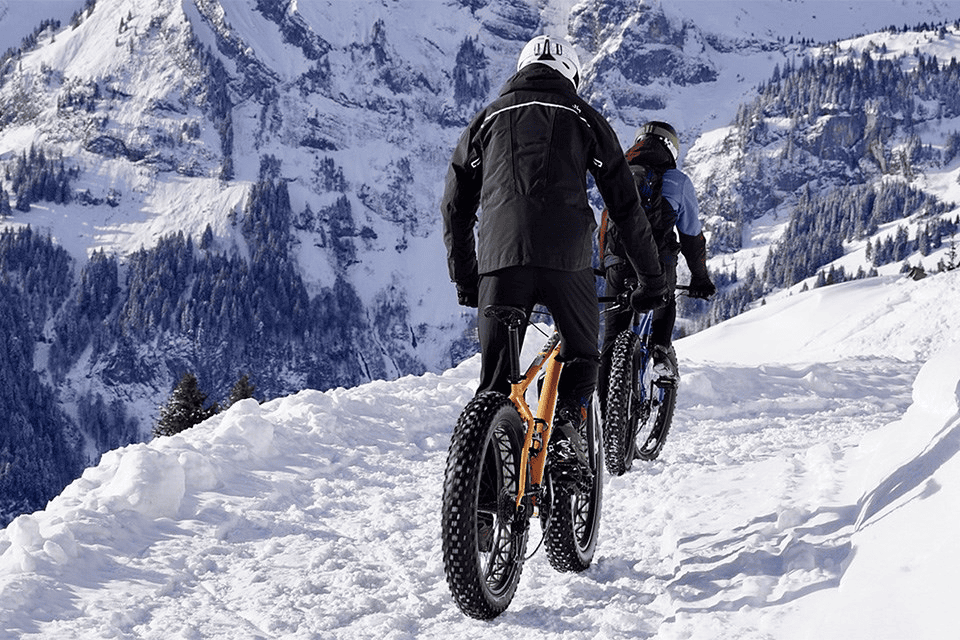
The Irony of the Canadian Deep Freeze: Why the Cold Warms You Up
Pedaling in -15 °C or -20 °C weather sounds completely unhinged—until you hit the first kilometer. The biggest rookie mistake is bundling up as if you’re planning to stand motionless at a bus stop.
Fat biking follows the classic three-layer rule, tailored to Canadian extremes: after just 15 minutes of cranking up Parachute Hill or climbing the slopes of the River Valley, you’ll feel toasty even in a bitter freeze. The real art of winter riding is managing your effort and layers so you don’t drench yourself in sweat on the climb, only to freeze on the high-speed descent.
The irony is that after two hours of battling snowdrifts, Edmonton’s frosty wind stops feeling like punishment—and starts feeling like the crispest, most invigorating energy drink on earth.
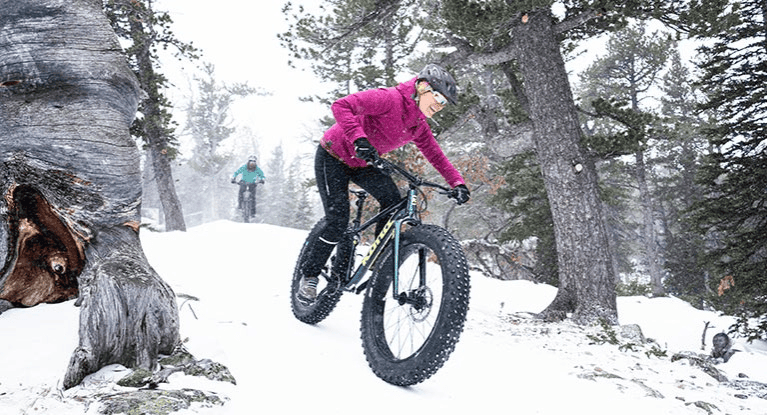
Sub-Zero + Fat Bike = Pure Endorphins
Fat biking through the scenic canyons of the River Valley proves a simple, refreshing truth: winter in Canada isn’t an excuse to write off several months of the year and hibernate under heavy blankets. Instead, it’s one of the most dynamic seasons in this northern metropolis.
While the rest of the world eyes the thermometer in dread and counts the days until spring, Edmonton’s cycling enthusiasts are out carving through snow-draped forest trails. They ride to the piercing calls of snowy owls, the crisp whisper of snow-laden spruce trees, and the faint, muffled rumble of the ice-locked North Saskatchewan River.
So if you happen to cross paths in a winter park with someone riding an outlandish bike on tires wider than your chunky snow boots—grinning ear to ear despite frost-nipped cheeks—know that they aren’t an eccentric or a reckless daredevil. They’re just an everyday Edmontonian who has cracked the ultimate secret of a harsh northern climate: how to turn sub-zero temperatures and deep snowdrifts into a source of pure, unfiltered adrenaline and winter joy.