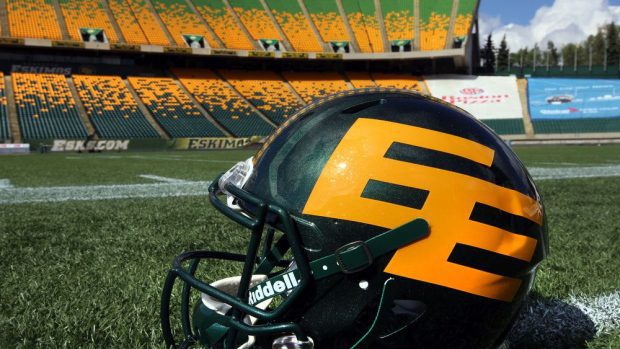

Edmonton, the center of Alberta, is a region rich in culture and history. Our city has given the world many remarkable individuals, including Michael J. Fox, Eric Johnson, Alphonso Davies, and many others. However, it’s one thing to talk about individual achievements and another to celebrate the legacy of an entire team. Building a team and maintaining it for nearly a century is a monumental task, akin to a complex machine where every member is a vital part. Teams like this have written their own chapters in Edmonton’s history. More on iedmonton.net.
The History of the “Eskimos”
Many residents of Edmonton have likely walked along 112 Avenue or Stadium Road and witnessed the grandeur of Commonwealth Stadium, the 56,000-seat arena that served as the home of the “Eskimos” for decades. Long before the team’s formation in 1949, Canada had already embraced rugby in the 1860s, a sport that rapidly gained popularity.
In 1949, Edmonton welcomed the creation of a new team, adorned in green and gold, dedicated to Canadian football—a sport in which two teams of 12 players compete to carry an oval ball into the opposing team’s end zone or through the goalposts. Initially named the “Eskimos,” historical accounts suggest that a similar team with the same name existed in Edmonton as early as 1895.
Four years before the official establishment of the “Eskimos,” another team, the Calgary Stampeders, was formed in 1945. Over time, these two teams would develop one of the most intense rivalries in Canadian sports history.
The Rise of the Team
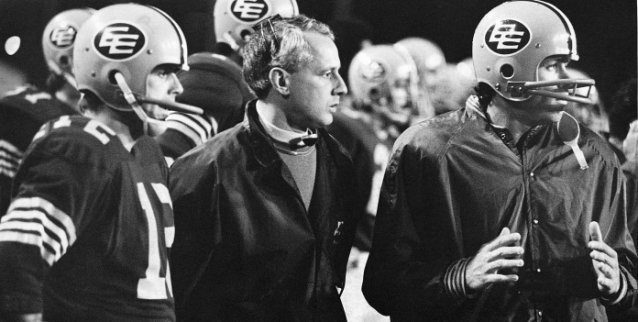
Just five years after its formation, the “Eskimos” achieved their first significant successes, setting the tone for decades of dominance. From 1954 to 1956, the team won the prestigious Grey Cup three years in a row, firmly establishing its ambitions.
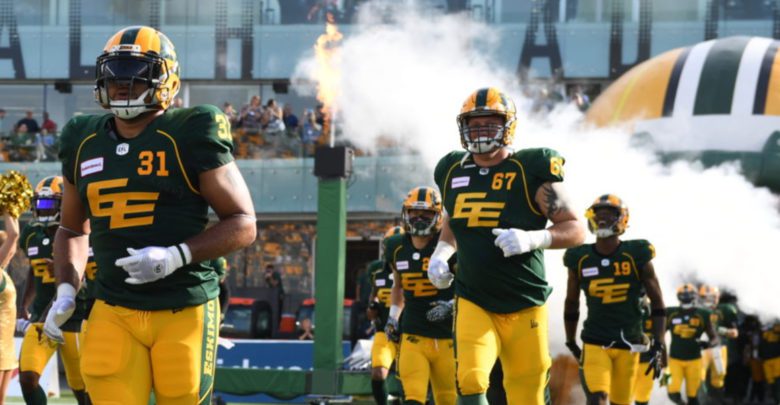
A second golden era followed between 1978 and 1982, during which the team claimed five consecutive championships.
In the 20th century, the “Eskimos” collected numerous other victories, including a notable Grey Cup win in 2015. By then, they were second only to the Toronto Argonauts in total championships, with 14 titles compared to Toronto’s 17.
Celebrating Legends
The team’s most legendary players are honored in a unique way: their names, numbers, and years of service are etched into the concrete barrier separating the playing field from the stadium’s seating. This enduring tribute ensures that their legacies remain part of Commonwealth Stadium.
Notable players and figures connected to the team include individuals like Norman Kwong, Bill Smith, Donald Getty, and Peter Lougheed. These figures not only excelled in sports but also played significant roles in Alberta’s political landscape.
Initially, the “Eskimos” played their home games at Clarke Stadium, but in 1978 they moved to Commonwealth Stadium, where they remain to this day.
Records and Controversies
The “Eskimos” hold a North American record for consecutive playoff appearances, making it to the postseason 34 times in a row. This remarkable feat, unmatched as of the early 2000s, reflects the consistency and dominance of the team over the years.
However, the team’s original name, “Eskimos,” sparked controversy in the 21st century. Many considered the name offensive to the Inuit people of Canada and beyond. After considerable debate and growing pressure, the team rebranded itself in 2020 as the Edmonton Football Team, also known as “EE.”
A Legacy Worth Celebrating
Despite the controversies, the legacy of the “Eskimos” remains a significant part of Edmonton’s history. With a devoted fanbase and a history of championship victories, the team continues to inspire future generations. One can only hope that new chapters in this storied legacy will be written in the years to come.