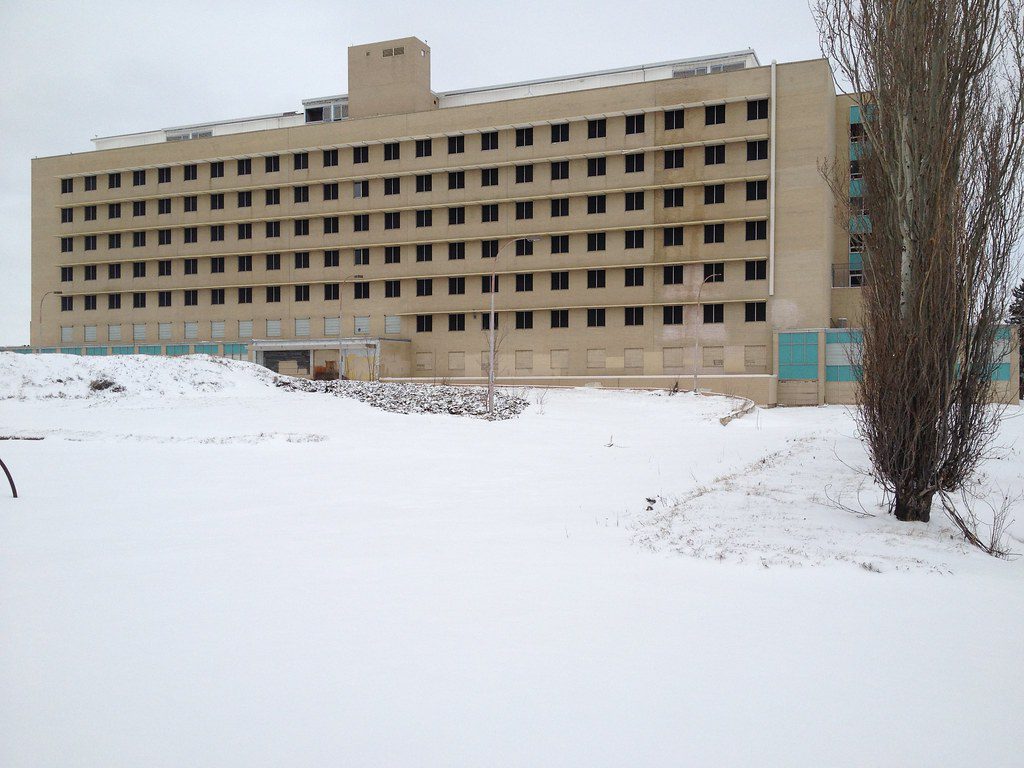

Edmonton is home to many unique places and buildings rich in history, some of which hold eerie and chilling tales. One such location is the Charles Camsell Hospital, known for strange occurrences and an unsettling reputation.
People have reported seeing human silhouettes in the hospital’s windows even when they are sealed shut. Others speak of terrifying screams at midnight, unexplained lights turning on, and mysterious flashes inside the abandoned building. More on iedmonton.net.
The History of the Hospital
The building housing the Charles Camsell Hospital was constructed in 1913 as a Jesuit boys’ college. In 1942, it was purchased by the U.S. Army and converted into a military base for soldiers sent north to build the Alaska Highway.
In 1944, the property was sold to the Canadian government, and the Royal Canadian Army Medical Corps began using it as a hospital for soldiers suffering from tuberculosis and other respiratory diseases.
By 1945, the facility was transformed into a tuberculosis hospital, referred to as an “Indian sanatorium.” It was jointly operated by the Royal Canadian Army Medical Corps and the Indian Health Service to address the devastating impact tuberculosis had on Indigenous communities. In 1946, the hospital was renamed in honor of Dr. Charles Camsell, a geologist and Deputy Minister of Mines and Resources.
For over 20 years, men, women, and children from various Indigenous communities across northern Canada were sent here for treatment.
In 1970, the hospital began treating the general population. It was officially closed in 1996.
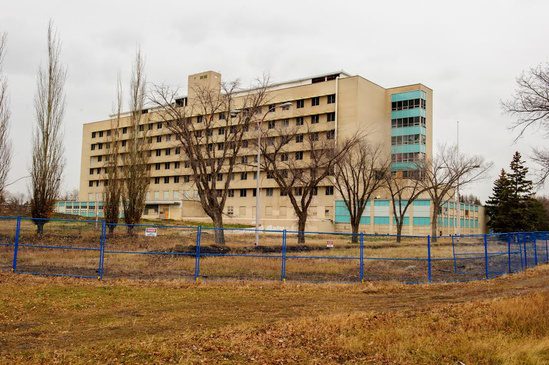
Dark Facts About the Sanatorium
The full truth of what happened within the hospital’s walls may never be known, but the stories passed down are horrifying. Numerous accounts suggest that patients, particularly from Indigenous communities, were subjected to experiments unrelated to tuberculosis. Families sent their loved ones to the hospital hoping for a cure, but many never saw them again.
Reports describe cruel practices such as shock treatments, forced sterilizations, food experiments, and the non-consensual testing of drugs. Families were often not informed of their loved ones’ deaths, and their bodies were buried in mass graves near the St. Albert residential school.
One local resident shared in an interview how he was conscripted from a nearby residential school to dig numerous graves in the frozen ground. He detailed the burial process and the treatment of the deceased, painting a grim picture of the hospital’s past.
Due to these haunting accounts, many locals believe the abandoned hospital is haunted. People claim the spirits of those who lost their lives here roam the empty corridors, hoping one day to escape their prison and reunite with the families from whom they were forcibly taken.
Recent Developments
In 1990, the government of the Northwest Territories launched a program encouraging sterilization victims to come forward and share their stories. Many families from northern communities responded, seeking answers about their missing loved ones.
The hospital property was purchased by a developer with plans to invest $200 million into a new residential complex on the site.