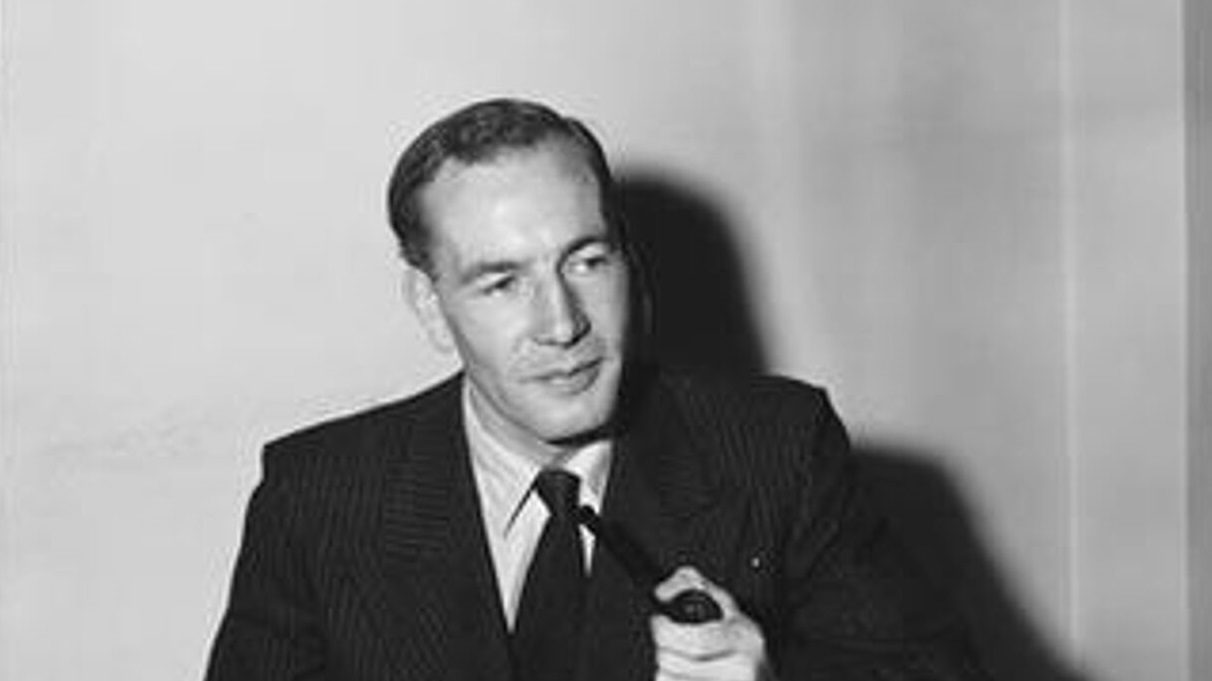

Every time people drive on Edmonton’s ring road, they either feel grateful or frustrated. The city’s traffic circles owe their existence to Noel Buckland Dant, Edmonton’s first city planner. More on iedmonton.
The Beginning
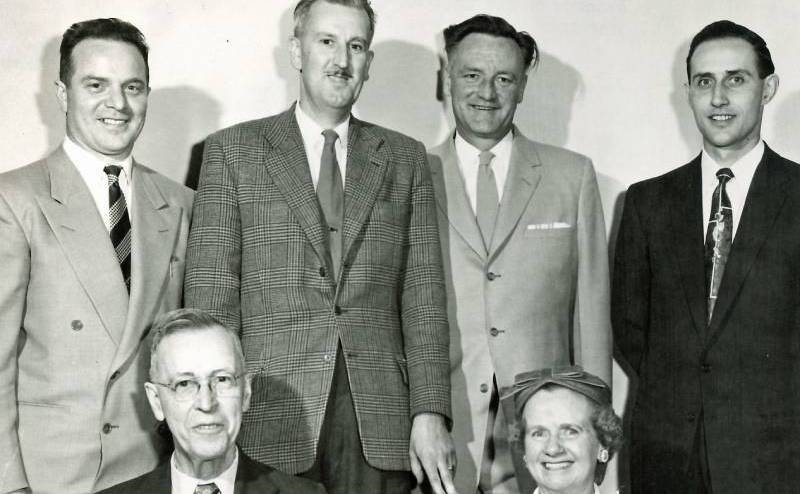
Noel Buckland Dant was born in England in 1914. He arrived in Edmonton in 1949 and became a strong advocate for new urban planning ideas. He introduced the concept of the “neighborhood unit” to Edmonton, drawing on urban design practices from his homeland. Dant is credited with designing Edmonton’s first 10 traffic circles, known at the time as “rings.” When he moved to Edmonton, he brought with him lessons learned from the structured urban planning of English cities.
Dant graduated from Yale and Harvard universities before working on the Toronto subway system’s early design. By 1949, he was hired as a senior urban planner for the Chicago Planning Commission.
At that time, Edmonton offered him the opportunity to lead the city’s first urban planning department. The post-war economic boom, combined with cheap gas and a growing number of car owners, created immense pressure on the city’s roads and transportation systems.
Initially, Edmonton had been planned with a grid system—streets running north-south and avenues running east-west. While this layout made navigation straightforward, it funneled traffic through residential neighborhoods.
Dant introduced a revolutionary “urban planning” approach. He replaced the grid system with curved street patterns that directed traffic toward schools, community facilities, and parks at neighborhood centers. Crescent-shaped streets and cul-de-sacs replaced rows of linear streets.
This unique design minimized through-traffic in residential areas, making the streets safer for pedestrians while reducing noise and air pollution. The curved street layout also encouraged walking and social interaction among neighbors. However, it was sometimes confusing for visitors trying to locate addresses.
The First Neighborhood Designs
Some of the first neighborhoods designed using Dant’s methods were Parkallen, Sherbrooke, and Dovercourt. Sherbrooke particularly benefited from the design, as children could play street hockey for hours without frequent interruptions from cars.
Sherbrooke was bordered by 118 Avenue to the south and 125 Avenue to the north, creating convenient routes for travel to and from the city’s outskirts.
Dant’s traffic circles appeared at various intersections across Edmonton, starting with two-lane circles at key locations. Drivers appreciated their simplicity and the ability to move counterclockwise around a central island without stopping.
However, some motorists struggled to understand the concept that vehicles inside the circle had the right of way. Minor accidents, such as rear-end collisions or side swipes, were common, but head-on collisions were rare.
By the 1950s, Edmonton had 12 major traffic circles, some with multiple entry and exit points. For example, the circle near Bonnie Doon Mall had five access points. Another, located at Princess Elizabeth Avenue and 101 Street, was oval-shaped and included connections to two additional local roads. Over time, many traffic circles were replaced by overpasses or traditional intersections.
A Lasting Legacy
Dant’s innovative design approach was replicated in more than 40 neighborhoods in Edmonton’s inner ring suburbs. His achievements earned him professional recognition, and in 1960, he left Canada to serve as a regional planner in Accra, Ghana.
Eventually, Dant returned to Edmonton and resumed his role as director of city planning. One of his most notable achievements was championing Edmonton’s outer ring road, which the city council eventually approved.
Noel Buckland Dant passed away in Edmonton in 1993. In 2004, he was recognized as one of the city’s 100 most influential residents.